

GALLOPING INTO THE FUTURE
Volume 2: Stylization


Volume 1 of this series established understanding of what the gallop is, offered an explanation for why it has taken over pools and races across the world, and explained why it is not going away any time soon.
Before diving into the different variations, origins, and mechanizations of the gallop, a few points are worth making.
This list is not meant to be exhaustive or the end-all-be-all on the topic. I welcome input from readers and fellow technique enthusiasts on other ways they see gallops develop as well as other important considerations.
Experienced coaches and athletes will quickly recognize that, in most cases, galloping swimmers are exhibiting several of these simultaneously.
Even though there is high correlation between many of these factors, it is important to list them separately. Understanding each one will help coaches uncover which is the chicken and which is the egg in their own swimmer.
The Gallop is not a technical solution for every swimmer and/or every freestyle race. Discretion is wise.
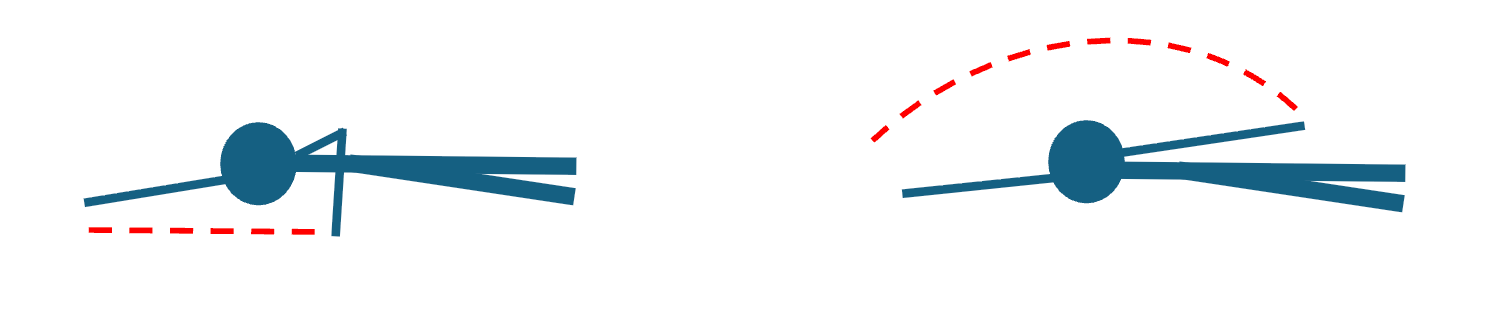
FINISHING PAST THE HIPS ON ONE SIDE AND NOT THE OTHER
Almost universally, the dominant arm finishes past the hips and the non-dominant arm exits short of the hips.
On the dominant side, the paddle (forearm and hand) stays deep, maintains contact with the water, and continues applying a backward vector until the hip passes the hand. On the non-dominant side, the paddle stops applying a backward vector before the hip passes the hand. The pull ends early, even if the arm is still moving.
Identifying features
On the dominant arm pull, the hand, forearm, and elbow tend to exit the water almost simultaneously. On the non-dominant arm, you will typically see the elbow exit first, followed by the wrist and then the hand. Look for an elbow exiting early near the suit line on one side. That early elbow exit is often the clearest visual marker.

RECOVERING WITH A STRAIGHT ARM ON ONE SIDE AND NOT THE OTHER
This is where it becomes obvious that many foundations of the gallop are correlated.
To finish past the hips, as mentioned above, the arm must straighten to enable the length necessary for the hand to pass the hips. That naturally sets up a straighter recovery on that side. If the other arm ends the pull early, the recovery begins with a more bent arm position, which feeds naturally into a bent elbow recovery.
The difference in how each side finishes the stroke can create the difference you see in recovery mechanics.
However, your thought process is incomplete if you assume this explains every case where one recovery is straight and the other is high elbow. The recovery pattern can also be driven by differences in shoulder mobility, breathing mechanics, tricep weakness, axial rotation, or an athlete deliberately applying more detail to one side of the catch.
Identifying Features
The same identifying features are seen here as in the example above. Here are some more visual cues:
The hand draws a relatively straight line forward on the high-elbow recovery side and an arc on the straight arm side.
The straight arm side recovery will be bigger and is likely to show more acceleration throughout than the high-elbow recovery.
BREATHING STRICTLY TO ONE SIDE
When a swimmer breathes strictly to one side, the head rotation adds to the amplitude of the body rotation, enhancing the pull strength and inertia in the paddle on that side. Swimmers lean into this, especially when they have a “weak side.” The same mechanics and resulting force are not seen on the other side.
Over time, the musculoskeletal development becomes imbalanced, and the swimmer loses both strength and mobility to the side that is not used.
Identifying Features
This is an easy one. Swimmer breathes exclusively to one side. But don’t gloss over this section - it sets up Volume 3.
Here is where we need to pay attention for the long-term health of your swimmer.
Do they do this all the time in practice and in every freestyle race 50 → 1650? Or have they adopted different styles for aerobic sets, anaerobic sets, and race model sets? Are they selecting the appropriate breathing patterns on a situational basis when racing?
This is critical, and I will cover more in Volume 3.
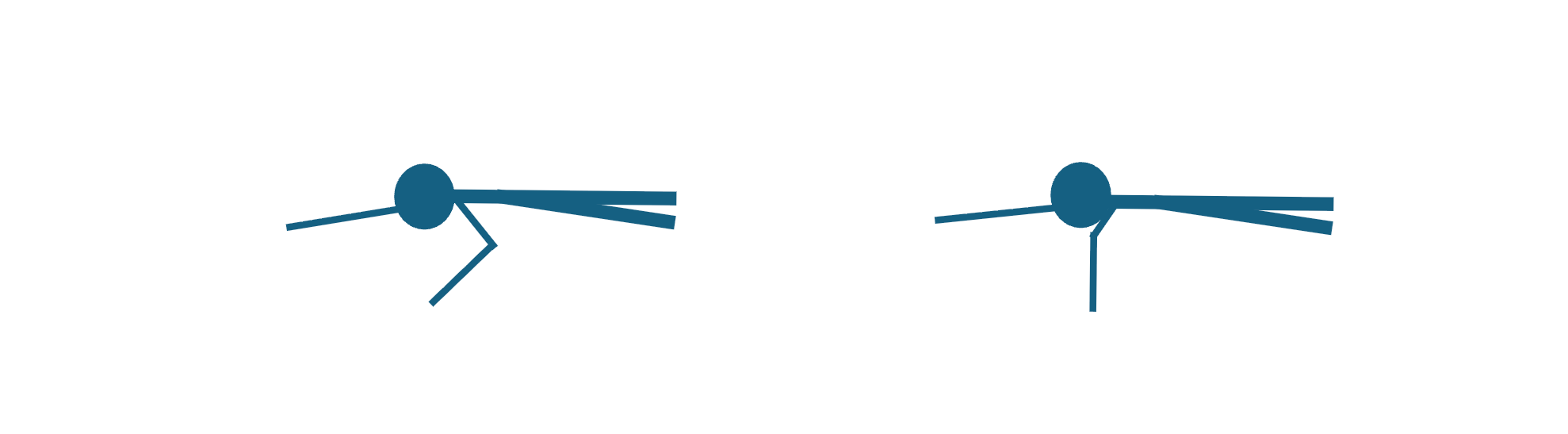
DROPPING THE ELBOW DURING THE PULL WITH ONE ARM BUT NOT THE OTHER
This gallop occurs when one elbow leads through the pull pattern too far in advance of the forearm and hand, leaving very little leverage to be realized. This is the least common form from what I have viewed.
Identifying Features
When viewing this gallop from the non-dominant side, you will see a slope in the forearm where the line from the elbow to the finger tips points forward to varying degrees. The dominant side will display a forearm line that is more perpendicular to the floor.
CROSSING OVER ON ONE PULL BUT NOT THE OTHER
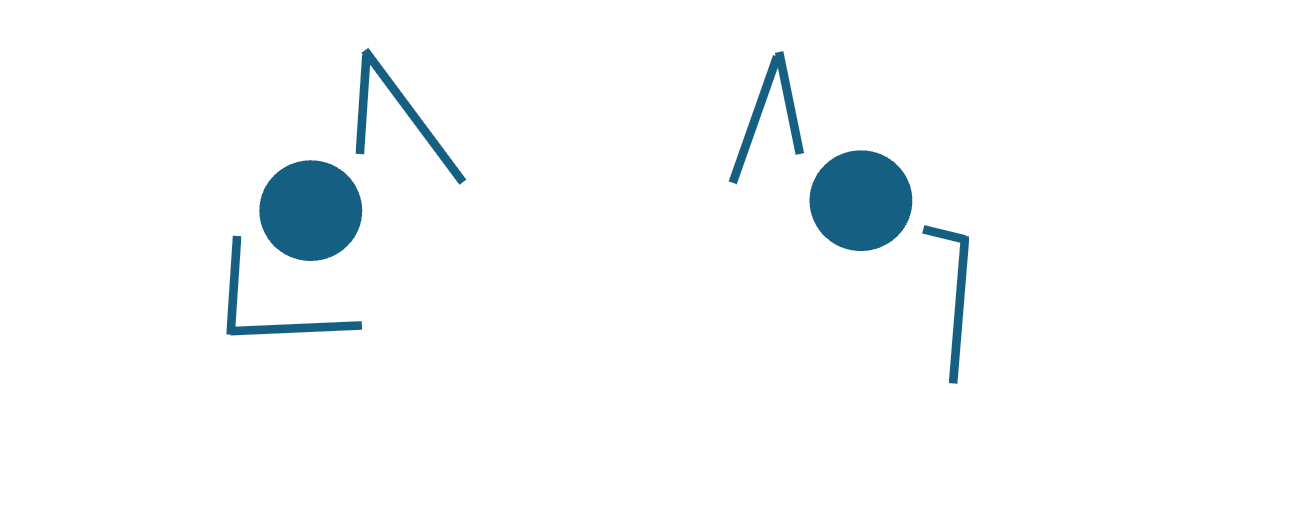
This gallop is where one forearm (elbow to finger tips) begins to point across the body toward the opposite wall during the pull. The other arm maintains a vertical forearm, maximizing leverage, and pointing (elbow to finger tips) down at the bottom. Ironically, this style shows up at elite levels as a highly functional variation AND at lower levels as a highly dysfunctional variation.
Identifying Features
When viewing this gallop head-on, you will see the non-dominant arm do a motion that resembles the effort to apply stick deodorant. Ironically, the closer they get to applying that deodorant, the more it stinks.
Elite gallopers will mitigate the amount of crossover. Floundering gallopers are more likely to have deodorant caked on the dominant armpit.
ROTATING HIPS/SHOULDERS MORE TO ONE SIDE
This characteristic can appear both as a cause of a gallop and as a result of one.
As an origin
A swimmer may rotate more easily, more powerfully, or more fluidly to one side due to musculoskeletal imbalance, neural mobility restrictions, or natural predisposition. Imbalance in axial rotation is highly correlated with imbalance in rotational force production. When this asymmetry exists at the beginning of a swimmer’s development, the swimmer quickly adopts an asymmetric stroke pattern.
As a symptom
A swimmer who swims with symmetrical freestyle and 75% catch-up timing on both sides will slowly trend towards imbalance if they only breathe to one side. When a swimmer begins exhibiting other gallop-related characteristics, such as unilateral breathing, musculoskeletal imbalances tend to develop or worsen. While repetitions to one side accumulate incongruently to the other, so do range of motion, muscle recruitment, and strength.
Identifying Features
This one is fun. Imagine that the bellybutton is a laser pointer. Now watch where the red dot goes. The belly button will point to the wall near the end of the dominant pull, but it will hardly ever occupy the quadrant on the other side of the body. The illustration below represent a frontal view of a swimmer and the ranges in which the belly-button laser pointer occupy on the dominant versus non-dominant side.

DIFFERENT CATCH TIMING ON ONE SIDE THAN THE OTHER
Based on what I have seen on the pool deck, understanding this one is critical. This is probably the easiest gallop to create for a swimmer. When timing of the catch differs on one side compared to the other, asymmetry is unavoidable. There are two main ways swimmers can vary catch timing to create a gallop.
First, the swimmer catches on one side at 75% catch-up and close to 100% catch-up on the other. Second, the swimmer catches at 75% catch-up on one side and close to 50% catch-up on the other.
Obviously there are many variations between and outside of those two points. Start by understanding that different timing on the catch will create asymmetry. Advance by diagnosing the timing of both sides of each of your swimmers.
Identifying Features
Think Pac-Man. If you see two different Pac-Men, you have a gallop.
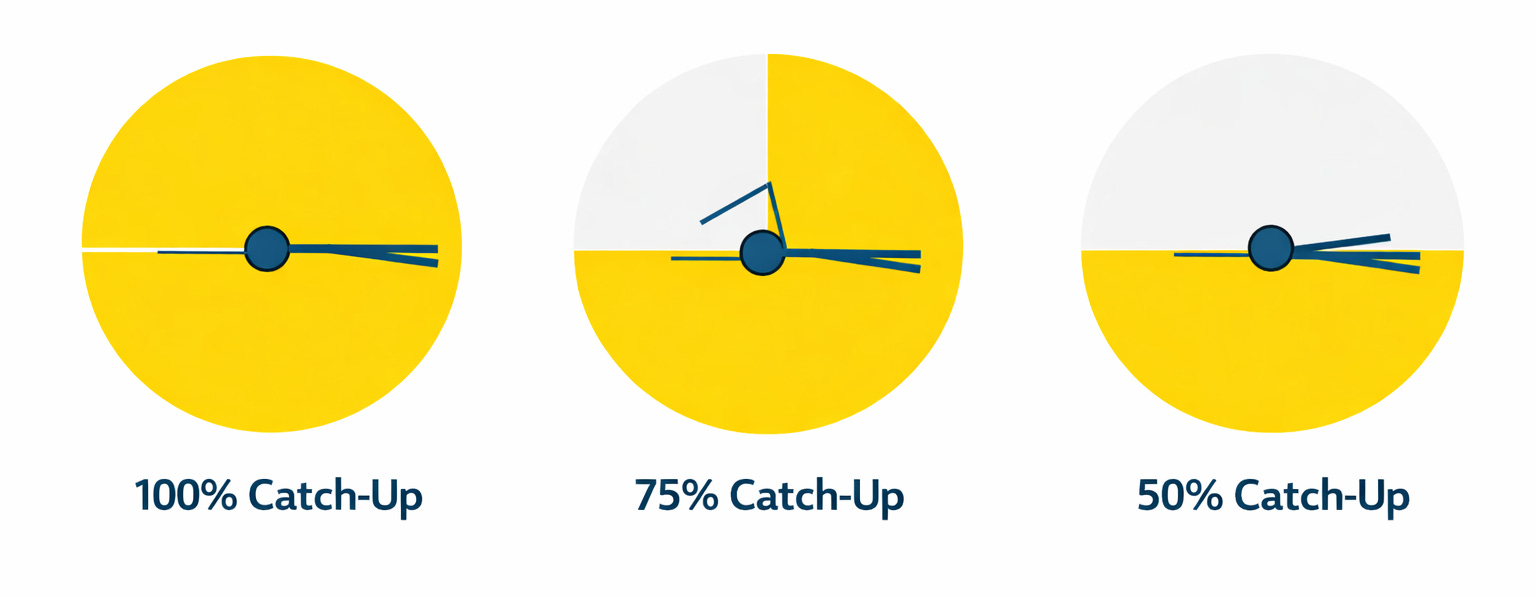
100% Catch-up: the recovery arm completes 100% of the pathway at the moment the catch is initiated.
75% Catch-up: the recovery arm completes 75% of the pathway at the moment the catch is initiated.
50% Catch-up: the recovery arm completes 50% of the pathway at the moment the catch is initiated.
INCONGRUENT HEAD MOVEMENT DURING ONE STROKE AND NOT THE OTHER
When a swimmer displays odd or incongruent head movement on one stroke but not the other, most often tied to the breath cycle, it impacts symmetry by lengthening one stroke and shortening another.
Odd head movement is easy to see and easy to blame. But not all odd head movement is wrong. In fact, some of it is functional and this represents an incredibly nuanced aspect of some elite-level gallopers.
Many swimmers who gallop alternate between a neutral head position and one that briefly peaks forward.
That peak is not incidental.
It is functional.
When properly timed, it contributes directly to force and velocity production during the pull.
Consider a lat pulldown or a pull up. A strictly neutral head position limits output. A subtle peak upward allows greater muscle recruitment, improved leverage, and better coordination across the system. More muscles working together means more usable power.
This is precisely why the vast majority of elite butterfliers peak forward while setting the catch.
Here is how I frame it for coaches who are looking to diagnose it.
Imagine the swimmer as a slot car. With a neutral head position, the nose is in the slot. To maximize power during the catch and early phase of the pull, the swimmer briefly slides the chin forward into the slot during the catch, then rotates the ear into the slot to breathe, and finally returns the nose to the slot after the breath.
The “peak” where the chin slides into the slot allows for a stronger pull in the same way that the same movement allows for more strength during a pull-up.
In well-coordinated gallop swimmers, this sequence is consistent and repeatable:
Neutral → Peak → Breath → Neutral
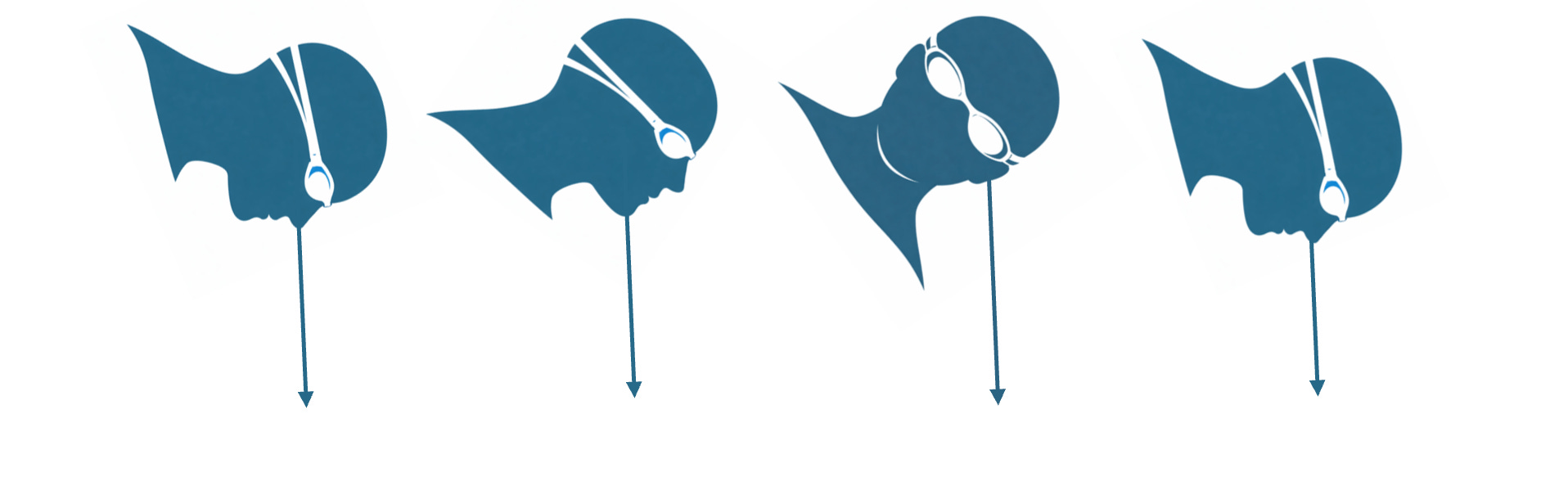
When this pattern appears on one stroke cycle and not the other, it is almost never an isolated flaw. It is usually coupled with differences in catch timing, rotation, or stroke length.
It’s important for coaches to understand this. In my estimation, more than 95% of incongruent head movement is speed-limiting. If it is speed-assisting, however, then the head movement may not be something to fix.
Regardless, incongruent head movement is a signal.
And if you ignore that signal, you will miss the real source of that gallop entirely.
SEGUE TO VOLUME 3
A swimmer who takes 20 strokes per length, trains six times per week, and swims 6,000 yards per practice 52 weeks per year will accumulate approximately 15 million strokes over a decade.
That number matters.
How coaches prescribe repetition matters!
Imbalance in an age-group swimmer is not only an aesthetic or velocity-related issue. It is a compounding one that requires heavy consideration.
Every asymmetry that goes unmanaged is rehearsed and reinforced millions of times during the most formative years of physical development.
This is where the gallop demands restraint.
Not because it is flawed. Because it is powerful. Because the compounding effect of millions of repetitions is transformational.
In Volume 3, the focus shifts from efficiency and stylization to responsibility. We will examine developmental considerations, establish guide rails, and outline how to teach swimmers to use the gallop discriminately as a means to maximize proficiency and protect long-term development.